
Advertising Agency: A Clear and Practical Guide for Businesses
An advertising agency helps businesses communicate their message to the right audience in the most effective way. Its main purpose is simple: make people aware of a product or service and motivate them to take action. While advertising may look easy from the outside, successful campaigns require planning, creativity, data analysis, and consistent execution. This is where an advertising agency plays a critical role.
What Is an Advertising Agency?
An advertising agency is a professional organization that plans, creates, and manages advertising campaigns for businesses. These campaigns can appear on digital platforms, television, radio, print media, outdoor hoardings, or social media. The agency works as a partner, understanding the brand’s goals and translating them into messages that connect with customers.
In short, a business knows what it sells, and an advertising agency knows how to present it so people actually notice.
Why Businesses Need an Advertising Agency
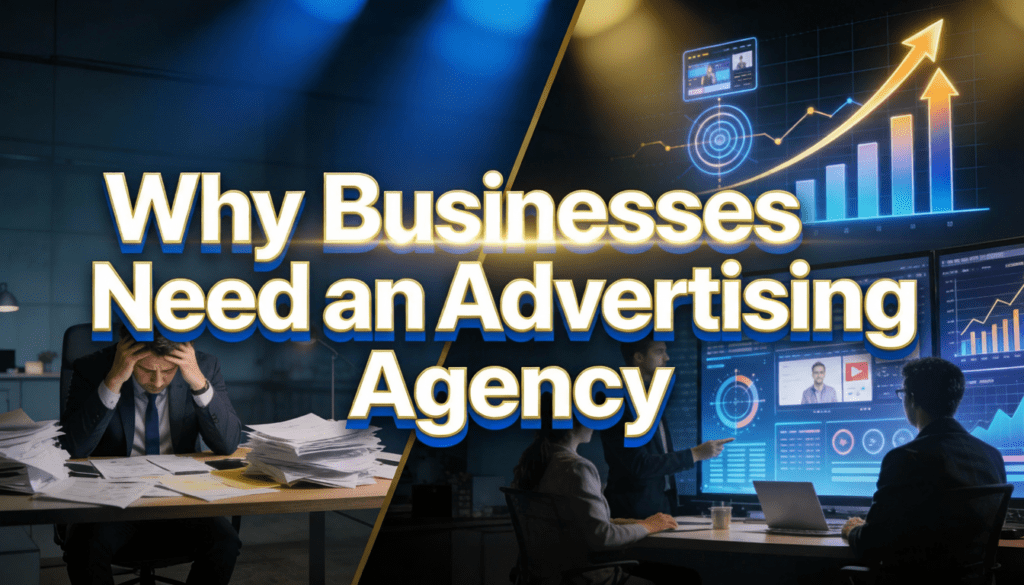
Many businesses try to handle advertising on their own. At first, this seems cost-effective. Over time, however, problems begin to appear—low reach, poor engagement, wasted ad spend, and unclear results. An advertising agency helps avoid these issues by bringing experience and structure.
An agency helps businesses:
- Reach the right audience instead of everyone
- Use advertising budgets efficiently
- Maintain a consistent brand message
- Track performance and improve results over time
Advertising is not about guessing what might work. It is about testing, measuring, and optimizing, which is difficult without professional support.
Core Services of an Advertising Agency
An advertising agency usually offers a range of services that work together as a system rather than as isolated tasks.
Strategy and Planning
Before creating any ad, the agency studies the market, competitors, and target audience. This ensures the campaign has a clear goal and direction.
Creative Development
This includes writing ad copy, designing visuals, creating videos, and developing ideas that attract attention. Creativity is not random; it is guided by strategy.
Media Planning and Buying
An advertising agency decides where ads should appear and when. This could include digital platforms, search engines, social media, television, or outdoor media. The goal is maximum visibility with minimum waste.
Digital Advertising
Most modern advertising agencies manage online ads, including search ads, display ads, video ads, and social media advertising. These campaigns are continuously monitored and optimized.
Performance Tracking and Reporting
Advertising without tracking is like driving with your eyes closed. Agencies analyze data such as impressions, clicks, conversions, and return on investment to improve future campaigns.
How an Advertising Agency Works
The process usually follows a clear structure. First, the agency understands the business objectives. Next, it defines the target audience and selects the right platforms. Then the creative team develops ads that match the strategy. Once the campaign goes live, performance is tracked, and changes are made if needed.
This cycle of planning, execution, analysis, and improvement is repeated to achieve better results over time.
Advertising Agency vs In-House Advertising
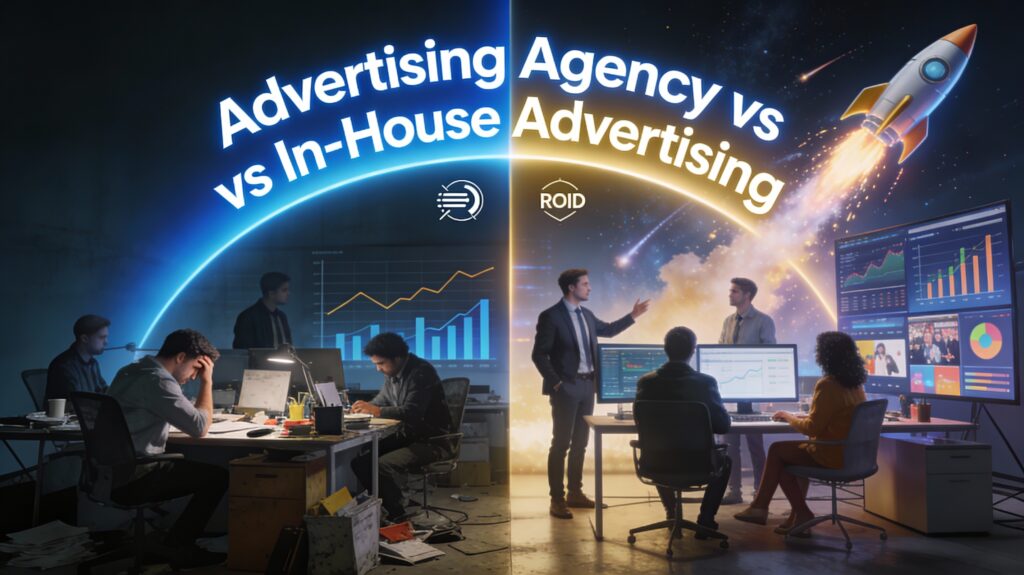
Some companies build internal advertising teams. While this can work for large organizations, it is often expensive and limited in expertise. An advertising agency offers access to specialists in strategy, design, copywriting, and analytics without the cost of hiring a full team.
Agencies also stay updated with changing trends, platform rules, and consumer behavior, which is difficult for small teams to manage alone.
Benefits of Hiring an Advertising Agency
Hiring an advertising agency provides several long-term benefits:
- Professional expertise across multiple channels
- Better use of advertising budgets
- Fresh creative ideas and perspectives
- Data-driven decision-making
- More time for business owners to focus on operations
A good agency does not promise instant success. Instead, it focuses on steady growth and sustainable results.
Choosing the Right Advertising Agency
Not all agencies are the same. When selecting an advertising agency, businesses should look for clear communication, transparent reporting, and realistic expectations. An agency that explains its process and focuses on long-term performance is usually a reliable choice.
The Role of Research in Professional Advertising
Professional advertising does not begin with creating designs or writing slogans. Research is always the first step. This includes understanding customer behavior, market trends, competitors, and platform performance. Research helps reduce guesswork and ensures campaigns are built on real insights.
Without proper research, promotions often fail to connect with the right audience. Data-driven planning improves accuracy and increases the chances of success.
Advertising and Brand Building
Advertising is not only about immediate sales. It also plays a major role in shaping how people perceive a brand. A well-planned approach helps maintain consistency in messaging, visuals, and tone across all platforms.
When customers repeatedly see the same style and message, trust develops naturally. Over time, this familiarity improves brand recognition and encourages long-term loyalty.
Short-Term Campaigns vs Long-Term Growth
Many businesses expect instant results from promotions. While short-term campaigns can generate quick attention, long-term efforts create stronger impact. Both approaches are important and serve different purposes.
Short-term campaigns focus on offers, launches, or events. Long-term efforts focus on awareness, credibility, and positioning. When combined, they support stable and sustainable growth.
Common Advertising Mistakes Businesses Make
Businesses that manage promotions without professional guidance often face similar challenges:
- No clear campaign goals
- Poor audience targeting
- Inconsistent messaging
- Stopping promotions too early
- Ignoring performance insights
A structured approach helps avoid these issues and improves overall effectiveness.
Use of Data and Performance Analysis
Modern advertising depends heavily on data. Performance metrics such as reach, engagement, and conversions help identify what is working and what needs improvement.
Decisions based on data are more reliable than assumptions. Continuous analysis leads to better planning, smarter adjustments, and improved outcomes over time.
Advertising for Small and Medium Businesses
Promotional planning is not limited to large brands. Smaller businesses also benefit from organized and strategic advertising efforts. With limited budgets, focusing on the right platforms becomes essential.
Careful planning helps control costs, avoid waste, and scale gradually while maintaining efficiency.
Transparency and Communication
Successful advertising requires clear communication. Honest reporting, realistic expectations, and regular updates help maintain trust. Growth through promotion is a process, not a one-time activity.
Transparency ensures businesses understand where their money is being spent and what results are being achieved.
Understanding the Target Audience
Every successful promotional effort starts with knowing the audience. Age, location, interests, and online behavior all matter. When messages are designed without considering these factors, they often fail to connect.
Clear audience understanding helps create messages that feel relevant instead of forced. This improves engagement and response rates over time.
Importance of Message Clarity
Confusing messages lead to confused customers. Advertising works best when the message is simple and direct. People should immediately understand what is being offered and why it matters to them.
Clear communication reduces hesitation and builds confidence in the brand.
Creative Elements and Their Purpose
Visuals, headlines, and layouts are not chosen randomly. Each creative element serves a purpose—attract attention, explain value, or encourage action.
Good creativity balances attractiveness with clarity. It should look appealing but still deliver the message effectively.
Platform Selection Matters
Not every platform works for every business. Some audiences prefer social media, while others respond better to search-based or display promotions. Choosing the right platform saves money and improves performance.
A focused approach usually performs better than spreading efforts across too many channels.
Budget Planning and Cost Control
Poor budget management is one of the biggest reasons promotions fail. Spending too much too quickly or too little without testing both cause problems.
A controlled budget allows testing, learning, and gradual improvement without unnecessary losses.
Testing and Optimization
No campaign performs perfectly from day one. Testing different formats, messages, and visuals helps identify what works best.
Regular optimization improves performance over time and prevents stagnation.
Building Trust Through Consistency
People trust what feels familiar. Consistent messaging, visuals, and tone help build credibility. When communication changes too often, trust weakens.
Consistency creates a professional image and strengthens long-term brand value.
Ethical and Responsible Promotion
Honest communication matters. Exaggerated claims may attract attention initially but damage trust later. Ethical promotion focuses on real value and accurate information.
Long-term success depends on credibility, not shortcuts.
The Importance of Clear Objectives
Every promotional activity should begin with a clear objective. Whether the goal is awareness, lead generation, or sales, clarity helps measure success. Without defined objectives, it becomes difficult to evaluate performance or make improvements.
Clear goals guide planning, messaging, and budget allocation.
Timing and Frequency of Promotions
When and how often messages are shown matters. Too few impressions may go unnoticed, while too many can cause fatigue. Balanced timing ensures the audience receives the message without feeling overwhelmed.
Consistent but controlled exposure increases recall and engagement.
Content Adaptation Across Platforms
The same message cannot be used everywhere in the same format. What works on social platforms may not work on search or display networks. Adapting content to each platform improves relevance and effectiveness.
Format, tone, and length should match user behavior on each channel.
Visual Simplicity and Readability
Overloaded visuals often reduce impact. Simple layouts with clear headlines are easier to understand and remember. Clean design improves readability and directs attention to the main message.
Good design supports communication rather than distracting from it.
Customer Journey Awareness
Promotional efforts should align with where the customer is in their decision-making process. Some users are discovering a brand for the first time, while others are ready to take action.
Messages should guide users smoothly from awareness to consideration and then to conversion.
Handling Market Competition
Competitive markets require clear differentiation. Highlighting unique value helps stand out without copying others. Understanding competitors helps avoid repetition and encourages originality.
Strong positioning builds recognition and trust.
Measuring Long-Term Impact
Not all results appear immediately. Some benefits, such as brand recall and trust, grow gradually. Long-term measurement helps evaluate real impact beyond short-term numbers.
Sustainable growth comes from patience and consistency.
Collaboration Between Teams
Successful promotion often requires coordination between creative, technical, and business teams. Clear communication ensures everyone works toward the same goals.
Alignment reduces errors and improves execution quality.
Continuous Learning and Improvement
Markets change, platforms evolve, and customer behavior shifts. Continuous learning helps adapt strategies and stay relevant.
Regular evaluation and improvement keep efforts effective over time.
Final Thoughts
An advertising agency is not just a service provider; it is a strategic partner. It helps businesses communicate clearly, stand out in competitive markets, and reach customers effectively. Advertising works best when creativity is supported by strategy and data. With the right advertising agency, businesses can move from random promotion to purposeful growth.
Comments are closed