
Search Engine Marketing: The Complete Guide to Paid Search That Actually Works
What Is Search Engine Marketing (SEM)?
Simple Definition of SEM
Search Engine Marketing (SEM) is a digital advertising strategy where businesses pay to appear at the top of search engine results pages. In simple words, SEM helps your business show up exactly when people are searching for what you offer.
Think of SEM like renting a premium billboard—except the billboard only appears for people who are already interested.
SEM in One Line for Beginners
SEM is paid advertising on search engines to get instant visibility, traffic, and leads.
Why Search Engine Marketing Matters Today
The “I Need It Now” Behavior of Users
People no longer browse patiently. They search, click, and decide—fast. SEM puts your business in front of users at the exact moment of intent. That’s powerful.
Why Businesses Love SEM
- Instant visibility
- Measurable results
- Full control over budget
- Targeted traffic
SEM is not about guessing. It’s about showing up with purpose.
How Search Engine Marketing Works
The Pay-Per-Click (PPC) Model
SEM mostly works on a PPC model. You only have to pay when someone clicks on your ad. No click? No charge. Simple and fair.
What Happens When Someone Searches on Google
- User types a keyword
- Google runs an auction
- Ads are ranked by bid + quality
- Best ads appear at the top
This entire process happens in milliseconds.
SEM vs SEO: Not a Fight, a Partnership
Key Differences Between SEM and SEO
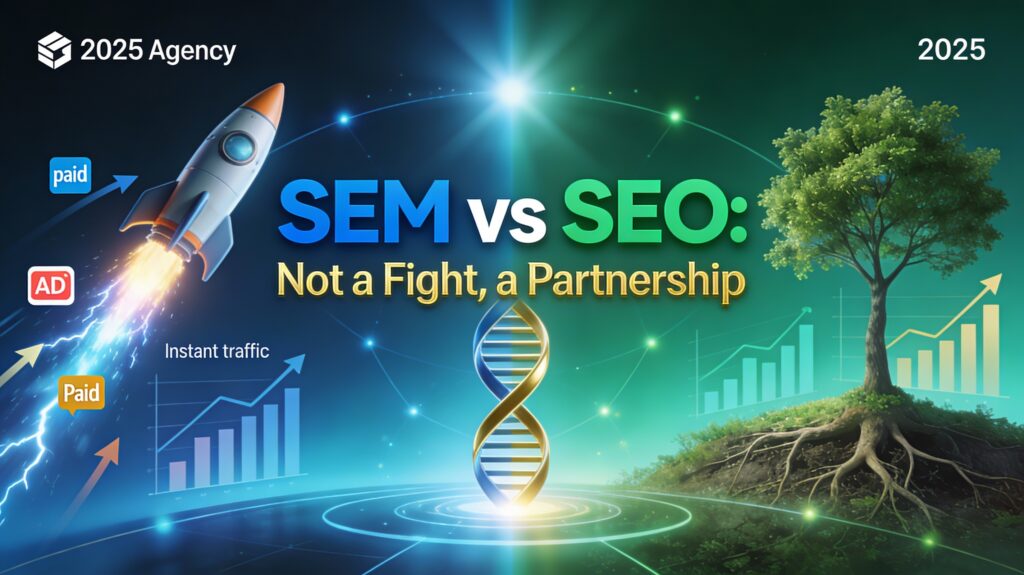
- SEM gives instant results
- SEO takes time but lasts longer
- SEM costs money per click
- SEO costs effort and patience
When to Use SEM, SEO, or Both
SEM is perfect for quick wins. SEO is ideal for long-term growth. Together, they work like coffee and deadlines—effective and unstoppable.
Core Components of Search Engine Marketing
Keywords
Keywords decide when your ads appear. Choose wrong, and you pay for the wrong crowd.
Ad Copy
Your ad copy decides whether users click or scroll past.
Landing Pages
Clicks don’t pay bills. Conversions do. Landing pages make that happen.
Bidding Strategy
Your bidding strategy controls how aggressively you compete.
Keyword Research for SEM
Types of Keywords in SEM
- Broad match
- Phrase match
- Exact match
Each has its own purpose and cost.
High-Intent Keywords Explained
High-intent keywords show buying intent. These are users with wallets open, not just curiosity.
Creating High-Performing Search Ads
Writing Ads That Get Clicks
Good ads are clear, relevant, and honest. They promise a solution—not miracles.
Common Ad Copy Mistakes
- Being vague
- Overpromising
- Ignoring user intent
Your ad is not poetry. It’s a sales pitch.
Landing Pages and Conversion Optimization
Why Traffic Alone Is Useless
Traffic without conversion is like filling a bucket with holes.
Elements of a High-Converting Landing Page
- Clear headline
- Strong CTA
- Fast loading speed
- Trust signals
Bidding Strategies in SEM
Manual vs Automated Bidding
Manual gives control. Automated saves time. The right choice depends on your goals.
Choosing the Right Bidding Strategy
Start simple. Scale smart.
Quality Score: Google’s Silent Judge
What Is Quality Score?
Quality Score measures relevance. Higher score = lower cost.
How to Improve Quality Score
- Relevant keywords
- Strong ad copy
- Optimized landing pages
Budget Management in Search Engine Marketing
Daily Budget vs Monthly Budget
Always start with a test budget. Learn first. Scale later.
How to Avoid Burning Money
Track everything. Pause what doesn’t work. SEM rewards discipline.
Tracking and Measuring SEM Performance
Important SEM Metrics
- CTR
- CPC
- Conversion rate
- ROAS
Metrics That Actually Matter
If it doesn’t impact revenue, it’s noise.
Common SEM Mistakes to Avoid
Beginner Errors
- No tracking
- Wrong keywords
- Poor landing pages
Costly Assumptions
More clicks ≠ more sales.
Search Engine Marketing for Small Businesses
Is SEM Worth It for Small Brands?
Yes—if done right.
Smart SEM Tips for Limited Budgets
- Focus on local keywords
- Use exact match
- Optimize landing pages
The Future of Search Engine Marketing
Automation and AI in SEM
Automation is growing, but strategy still matters.
What Businesses Should Prepare For
Smarter ads. Higher competition. Better targeting.
Benefits of Search Engine Marketing (SEO Booster)
Benefits of Search Engine Marketing for Businesses
Search engine marketing offers benefits that other marketing channels simply cannot match. One of the biggest advantages of search engine marketing is control. You decide who sees your ads, when they see them, and how much you spend.
Another major benefit is speed. Unlike SEO, which takes time, search engine marketing can start driving traffic the same day your campaign goes live. This makes SEM ideal for product launches, seasonal offers, and competitive industries.
Search engine marketing also provides clear data. Every click, impression, and conversion can be tracked. This means decisions are based on numbers, not assumptions.
Conclusion
Search engine marketing is not about spending more money. It’s about spending smarter. When done right, SEM becomes one of the fastest and most reliable ways to grow visibility, traffic, and sales. Treat it like an investment, not a gamble—and it will reward you.
FAQs
Is search engine marketing expensive?
SEM can be affordable if managed properly with the right keywords and strategy.
How fast does SEM show results?
You can see results within hours of starting a campaign.
Can SEM work without SEO?
Yes, but combining both gives better long-term performance.
Is SEM suitable for local businesses?
Absolutely. Local SEM drives high-intent customers nearby.
Do I need an agency for SEM?
Not mandatory, but expert management saves time and money.
Comments are closed